
What does conservation mean to us?
By Thai Hwang-Judiesch, Posted on May 13, 2026
Under the mounting pressure of climate change, there is growing awareness around the importance of conservation to protect our forests. But what does conservation really mean?
More traditional Western definitions may assume that it is the protection of forests, specifically from the damaging effects of human activity. Although this definition may seem benign, even altruistic, it holds a thinly veiled philosophical underpinning at the heart of it: humans are a net negative to the natural world. It is this very assumption that Community Forests and other organizations are hoping to challenge. What would happen if human activity promoted and honoured the diversity of the forest? How could humans still benefit from natural resources with the responsibility of mutual reciprocity? What would change if we began to assume that humans can and should be a net positive force for the natural world?
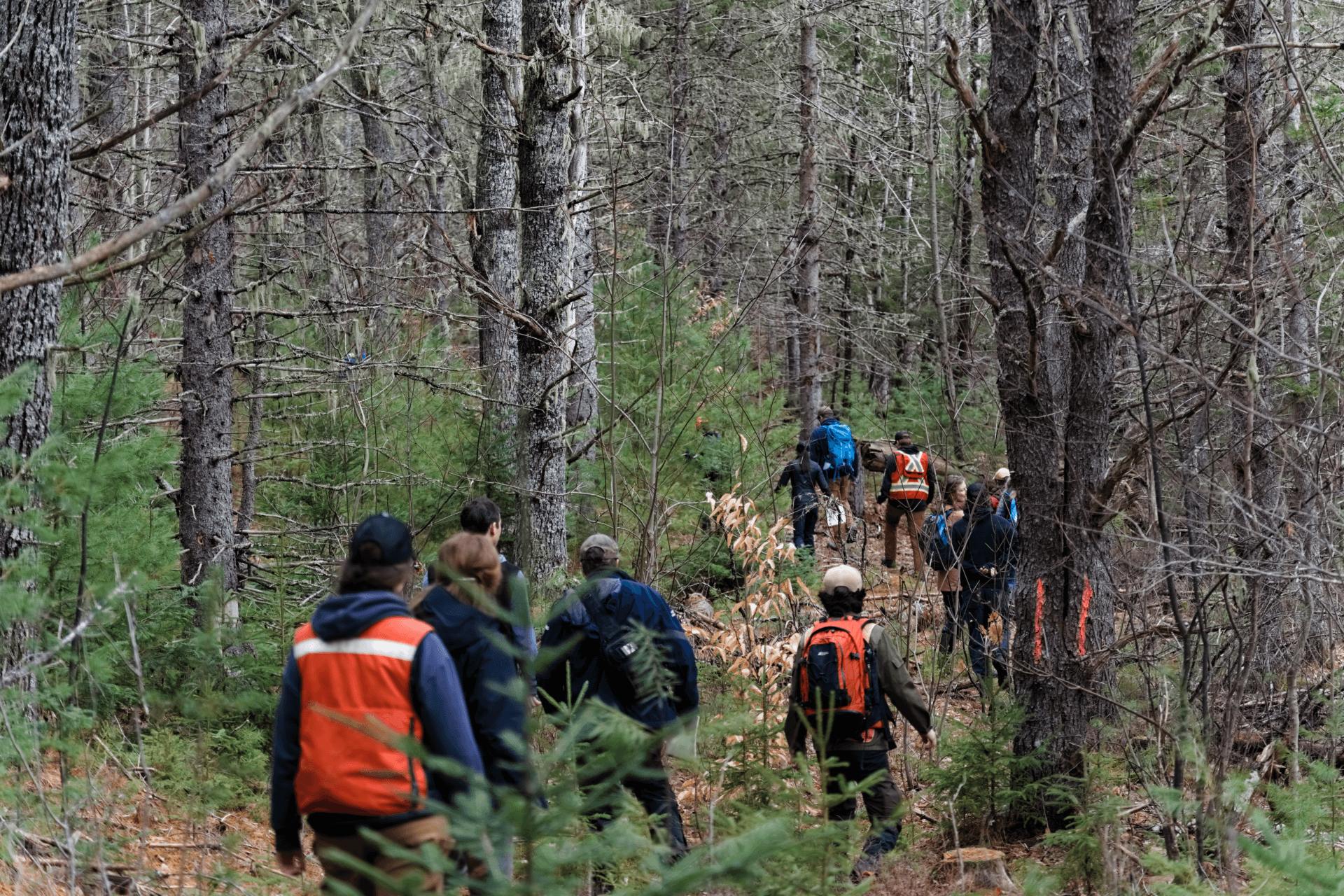
For over 10 years, Community Forests has been researching and practicing active management in the Wabanaki forest on the lands in our care. This climate-based forest management looks like promoting increased diversity, creating room for climate-resilient trees to grow, and, overall, restoring often-degraded forests back to naturally resilient ecosystems. All while supporting ethical harvests and good jobs in forestry for people on the land today and in the future. This is what conservation means to us.
This is our humble attempt to echo thousands of years of reciprocal forest care that Wabanaki Nations 1 and communities have always upheld 2. In this article we will take a closer look at our conservation work in the Robinson Forest.
Rights-Based Conservation
Conservation has a colonial history that we must contend with. In the name of protecting the earth’s natural diversity, Indigenous peoples have been displaced from their homelands and their human rights infringed upon. In a key study of rights-based conservation, it was calculated that the financial cost of displacing even 1% of Indigenous peoples that live in bio-diverse zones in favour of a conventional “protected” area, significantly supersedes the costs attached to simply recognizing and respecting Indigenous land rights 3 . Respecting Indigenous peoples’ rights to their land goes far beyond financial cost and benefit— but under almost every metric, rights-based conservation is the most effective pathway to protect ecosystems.
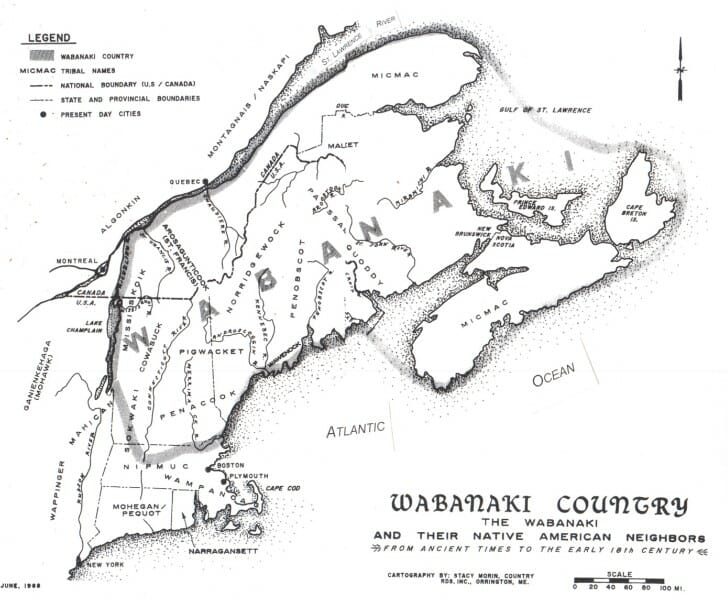
In the Wabanaki forest, oral histories and modern scholars illustrate how millennia of Indigenous management intentionally created biodiverse species mosaics. Using a range of techniques such as low-intensity controlled fires to clear underbrush and cycle nutrients—alongside honourable harvesting—Wabanaki peoples encouraged the growth of culturally important species and wider forest diversity. As Penobscot researcher Dr. Darran Ranco shows, this sophisticated and intentional Indigenous forest stewardship history reveals just how false the colonial myth of wilderness without people really is.4
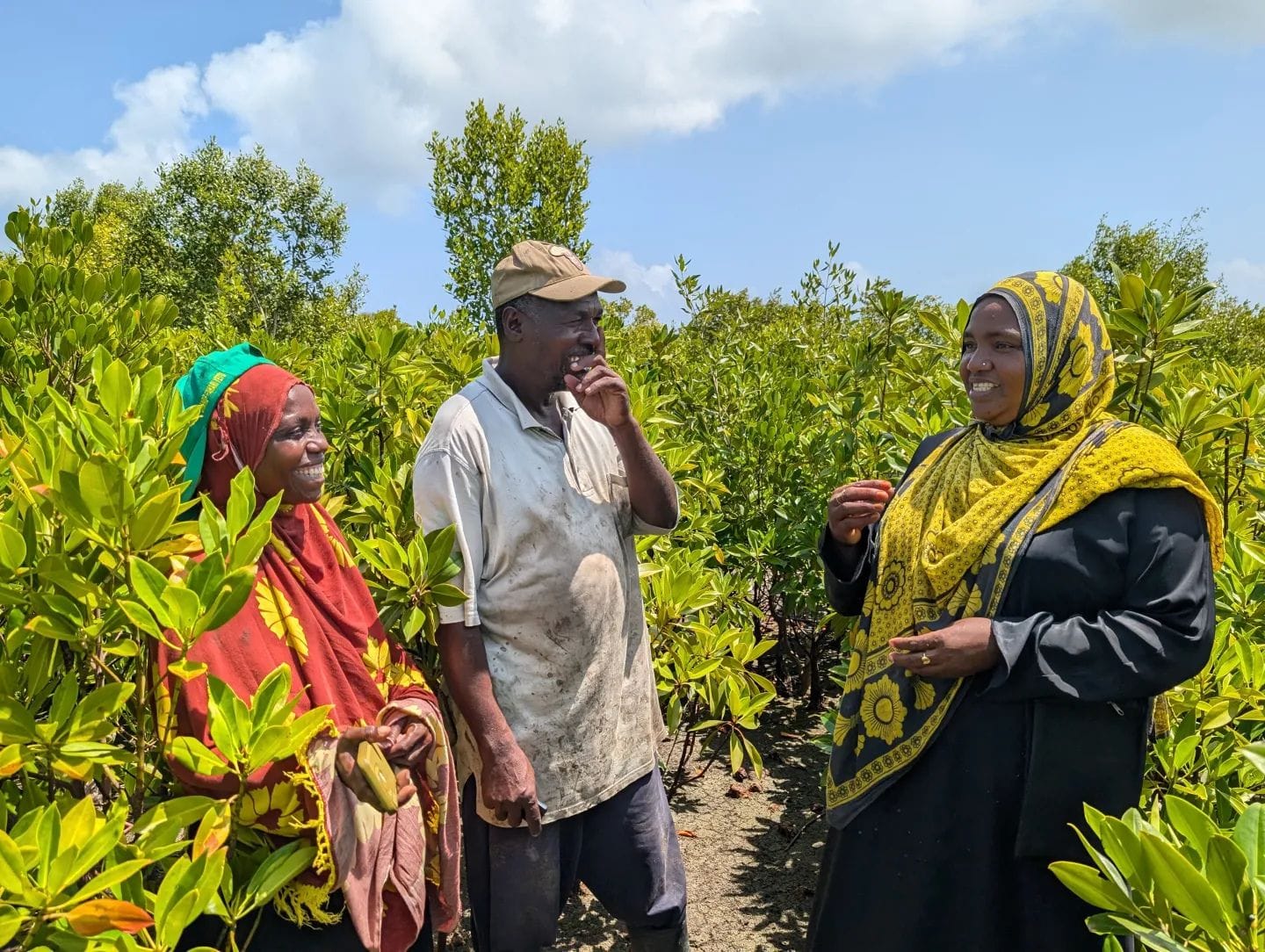
Although this article will be Wabanaki forest focused, it’s important to note that our work in Zanzibar echoes our conservation values of community determination. Community Forest Pemba has helped ratify 8 Community Forest Management Agreements (CoFMAs) into law. These community-led land agreements ensure that coastal communities on Pemba and Uguja island have legal rights to manage a critical earth ecosystem, mangrove forests. Like our work in the Wabanaki forest, CoFMAs ensure that community rights to land are considered a conservation measure.
Robinson Conservation Forest
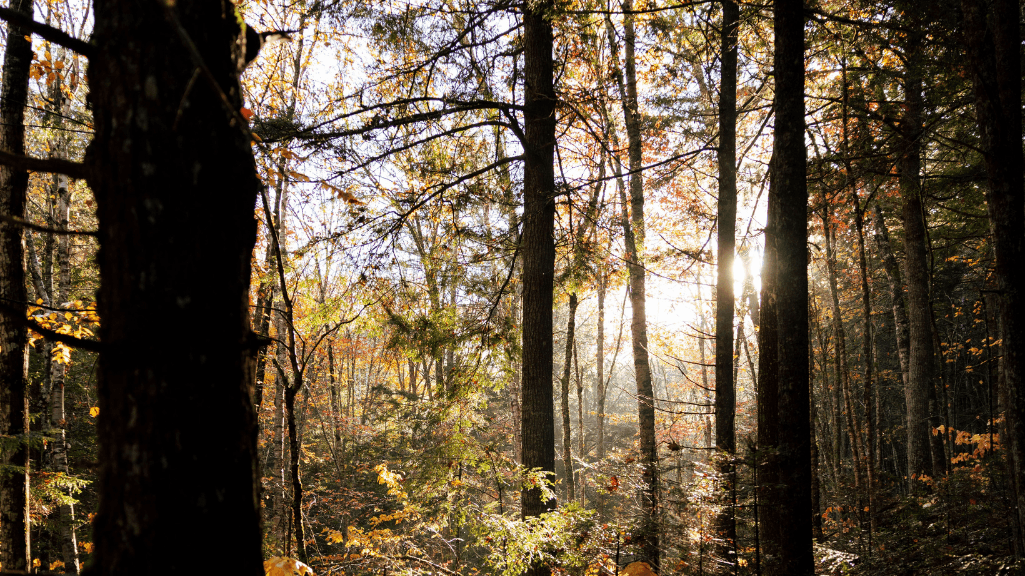
The Robinson Conservation Forest in Cambridge Narrows is a great example of careful land stewardship over hundreds and even thousands of years, containing old forest with a diversity of tree species including Eastern hemlock, white pine and red spruce. In pre-colonial days, these trees were a fixture in the Wabanaki Forest, but because of decades of intensive harvesting and softwood plantations, old forests like this are a rarity today.
The Robinson Forest was sold to Community Forests by Robena Weatherley in 2019. The forest had been cared for by her family since the early 19th century, and had been lived on, travelled through, and stewarded by Wolastoqey Peoples for countless generations before that. Robena recalls her father selectively cutting trees for lumber, managing the forest to protect its biodiversity while still benefiting from its resources.
We were curious about what ecosystem services a carefully managed forest like Robinson provides, and what we found affirmed the immense asset of thriving forests. During a major rain event, Robinson Forest can hold 10 olympic size swimming pools of water, slowly releasing it over time to reduce flooding. For a clear-cut forest to be able to hold that water, four catchment ponds would need to be built, at a cost of around $1M dollars. Clearcutting this old, diverse forest might give an estimated return of $285,000, but the cost of replacing such a critical ecosystem far outweighs any short-term monetary benefit. The Robinson forest highlights something critical. When we create conditions that allow the forests under our care to thrive, they protect us in turn, ten-fold.
And yet, we have learned from our partners at the Wolastoqey Nation that forests like Robinson are more than just the value their ecosystem services provide. Understanding the region’s forests and knowing how to restore their balance and harmony, require a holistic approach to conservation that is often overlooked in traditional conservation practices.
Healing our forests
The story of the land adjoining the Robinson Conservation Forest is a story shared by many forests in the Wabanaki region. It has lost complexity and diversity due to past intensive harvesting, and requires support and care to return it back to a vigorous condition. It is on this land that we have worked in collaboration with the Wolastqey Nation on a Forest Healing Plan (Nikanki Tpitahasimok Askomi Kikehtasikil Kcihqol).
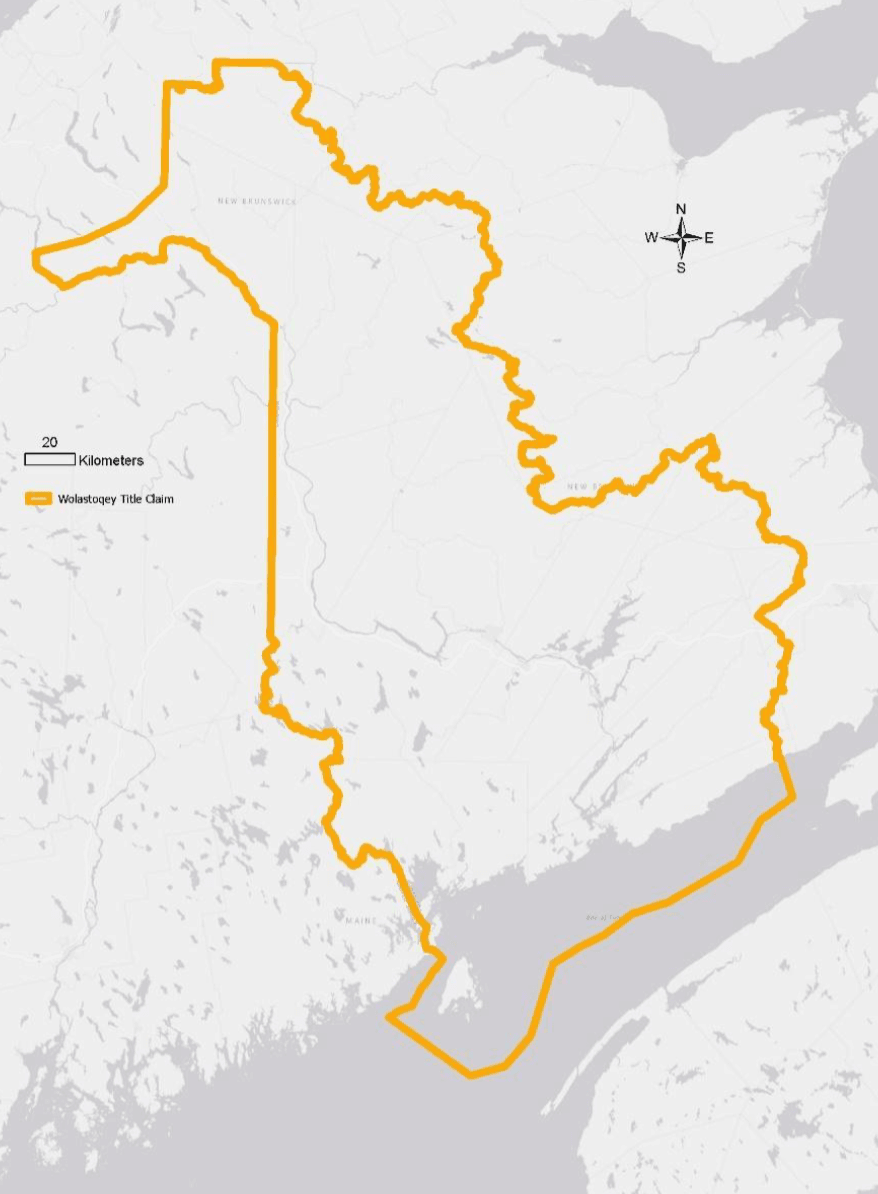
It was through this collaboration that the concept of “forest healing” was developed instead of a typical “forest management” plan. This healing plan is, of course, more than just a change of names, but a co-management strategy that, through collaboration, aims to honour the rights and beliefs of the Wolastoqiyik and therefore integrate a more holistic approach to forest care.
Western sciencehas only recently begun to understand the intricate web of plants, trees, animals and humans that make up forest ecosystems. However, this interconnection has been deeply understood by the Wolastoqiyik and Indigenous ways of knowing for tens of thousands of years. The forest healing plan aims to integrate that knowledge through consultation with Indigenous Knowledge Keepers, Elders and Wolastoqi experts.
Similarly to The Wabanaki Forest, Climate and Land Back Initiative, our priority is to ensure that Indigenous partners and their communities have access to the conserved forests to hunt, gather or just enjoy the land. Not only does this respect the long-standing treaties in New Brunswick and Nova Scotia 5, but also honours the fact that the Nations of the Wabanaki Confederacy have had their own systems of land management that have supported diverse forests for thousands of years.
Resources:
- The Nations that make up the Wabanaki Confederacy include: the Mi’kmaq, Wolastoqiyik, Passamaquoddy, Penobscot, and Abenanki
- Pawling, Micah A. “Wabanaki Forests: Identity, Cultural Connections, and a Call for New Collaborations.” Maine Policy Review 34, no. 1 (2025): 22–27.
- Worsdell, Thomas, Kundan Kumar , James Allen, Gwili Gibbon, Andy White , Arvind Khare , and Alaine Frechette. Rights-based conservation: The path to preserving Earth’s biological and cultural diversity?, November 24, 2020.
- Harper, B., & Ranco, D. (2009). Wabanaki Traditional Cultural Lifeways Exposure Scenario.
- Government of Canada; Crown-Indigenous Relations and Northern Affairs Canada; “Peace and Friendship Treaties.” Government of Canada; Crown-Indigenous Relations and Northern Affairs Canada;, December 10, 2015.