
Protecting the Hemlocks at Whaelghinbran
By Thai Hwang-Judiesch, Posted on September 3, 2026
A proactive silviculture intervention
Whaelghinbran Forest is the first forest that came into our care. Part of this 786-acre forest includes a 32-acre hillside covered in hemlocks that feel cathedral-like as you enter their grove. The oldest hemlocks in this stand are around 140 years old, and when you walk into the densely shaded area that remains cool even on the hottest summer days, you can feel the weight of their history.
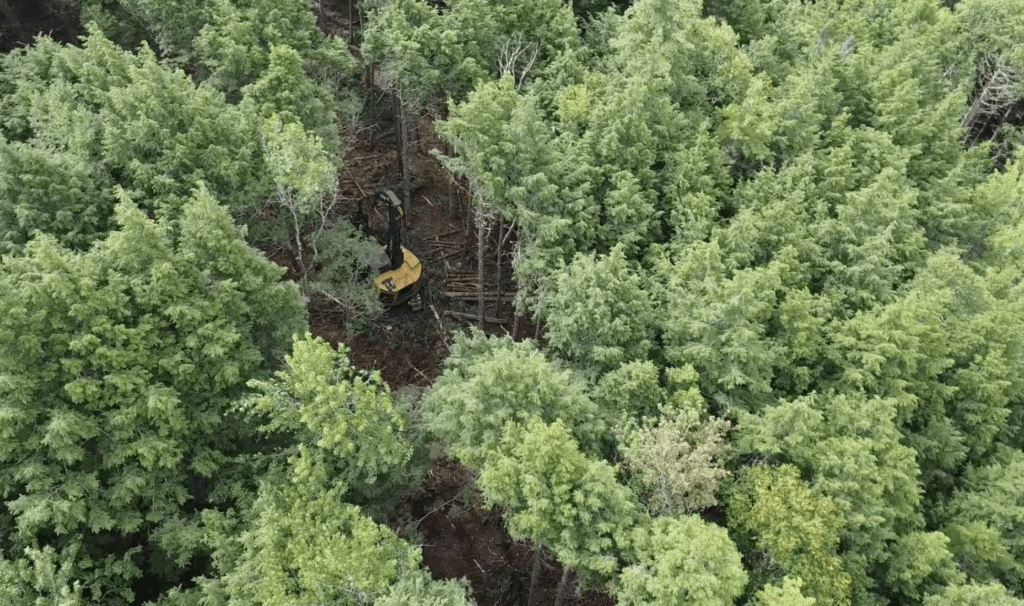
In New Brunswick, this stand is a rarity. A stand of these majestic conifers occurs only when a forest remains largely undisturbed for many decades (or even centuries), allowing hemlocks to establish and grow to a large size. Hemlocks are considered a ‘keystone’ species—they play an outsized role in sustaining and protecting the intricate web of forest life, reducing the risk of flooding, regulating water flow, minimizing soil erosion and filtering pollutants. For the Wabanaki nations, hemlocks also provide a place for cultural and ancestral reconnection.
A small insect called the Hemlock Woolly Adelgid (HWA), native to Asia, first arrived in Canadian forests on the shores of southern Nova Scotia and has been slowly decimating hemlock populations. It feeds on the sap of hemlock trees and, if left untreated, will eventually kill them in 4 to 15 years. Dispersed by wind and birds, it is beginning to spread North across Nova Scotia.
With this treasured hemlock stand at Whaelghinbran sitting approximately 25 km across the bay from Nova Scotia, it is with heavy hearts that the forest team knows that it is not if HWA will arrive in our forest, but when. After many years of conversations and witnessing our friends at Asitu’lɨsk come together to protect their Hemlocks, our forest team has decided to proactively intervene to improve the vigour and resilience of that stand. With almost 95% of this stand being composed of hemlocks, which store a significant amount of carbon, inaction could risk the loss of those important trees in a short period of time. With these considerations in mind, the forest team settled on implementing a low-impact, carefully monitored silviculture intervention to open the canopy slightly and encourage other tree species—red oak, large-toothed aspen, red spruce, and red maple—to seed in and diversify the stand.
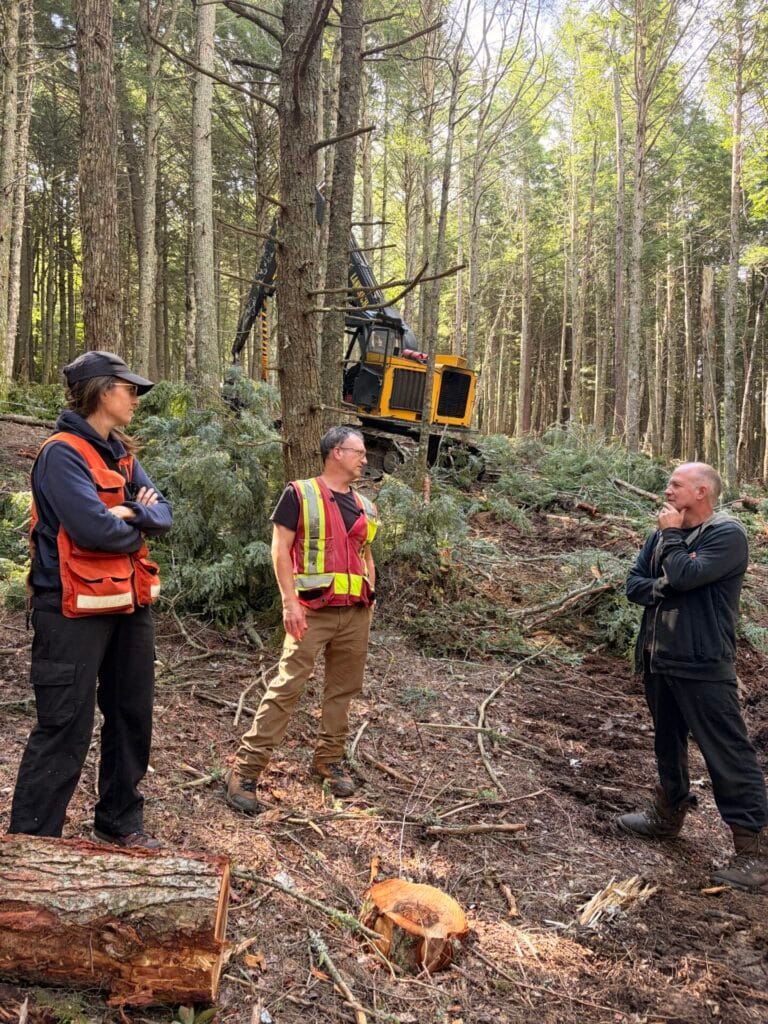
The intervention involves two parts: first, creating two small gaps in the hemlock stand’s canopy where there are already seedlings and saplings that need light to grow, and second, lightly thinning the most accessible part of the stand to free up resources for the remaining trees. A substantial part of the stand will remain unharvested as a control to compare against the results of the intervention. With more light filtering through the canopy, we hope to encourage greater diversity of tree species to regenerate and for the existing hemlocks in the stand to grow stronger, benefiting from increased resources. Although this intervention will not prevent HWA from arriving in the forest, we hope it increases the overall resilience of the stand and gives the remaining trees a better chance of withstanding HWA when it does arrive.
Given the importance of this forest, we sought input and feedback from our stakeholder community. Whaelghinbran Forest is in the territory of the Wolastoquey Nation, so we sought feedback from our colleagues at the Wolastoquey Nation in New Brunswick (WNNB), since hemlocks are a significant cultural touchstone for the Wabanaki nations. We also connected with the previous caretaker of Whaelghinbran, Susan Tyler, to hear her thoughts on our plans. It is with the permission of our partners and collaborators that we decided to move forward with the intervention at the end of this summer.
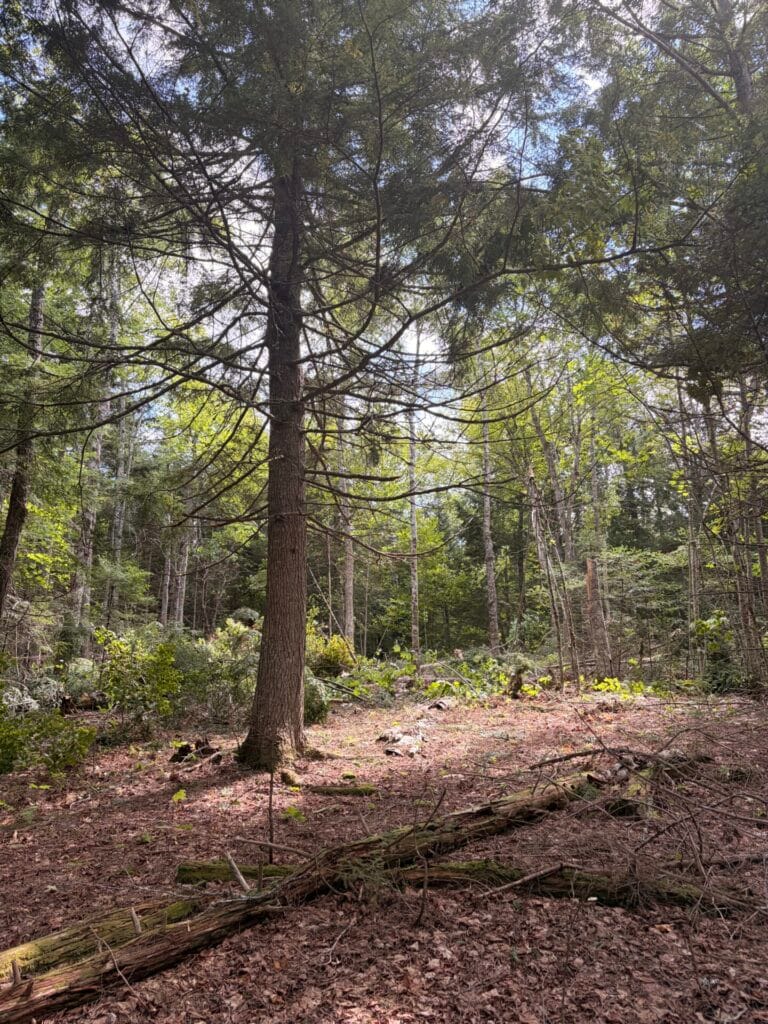
Gap created in the hemlock canopy.
Another partner that we have been in conversation with is the forest itself. By starting small and slow before considering a broader intervention, we are seeking to monitor how the forest responds to our activities: What growth is being stimulated in the gaps provided? How is this affecting the existing hemlock trees? Are other tree species like red oak and red maple growing in these gaps? By consulting primary research on HWA and observing how the forest responds, we can use this information to decide what to do next. We hope to use the time that has been afforded to us to protect the forest as best we can.
If you want to ask any questions on the interventions to the hemlock stand, you can do so by emailing: communications@forestsinternational.org
Keep an eye out for an upcoming newsletter, where I chat with the forest team and share some updates on how the intervention has gone.